

Keeping the Momentum: Implementing Your Change Roadmap Successfully
The Secrets to Sustaining Momentum and Driving Success

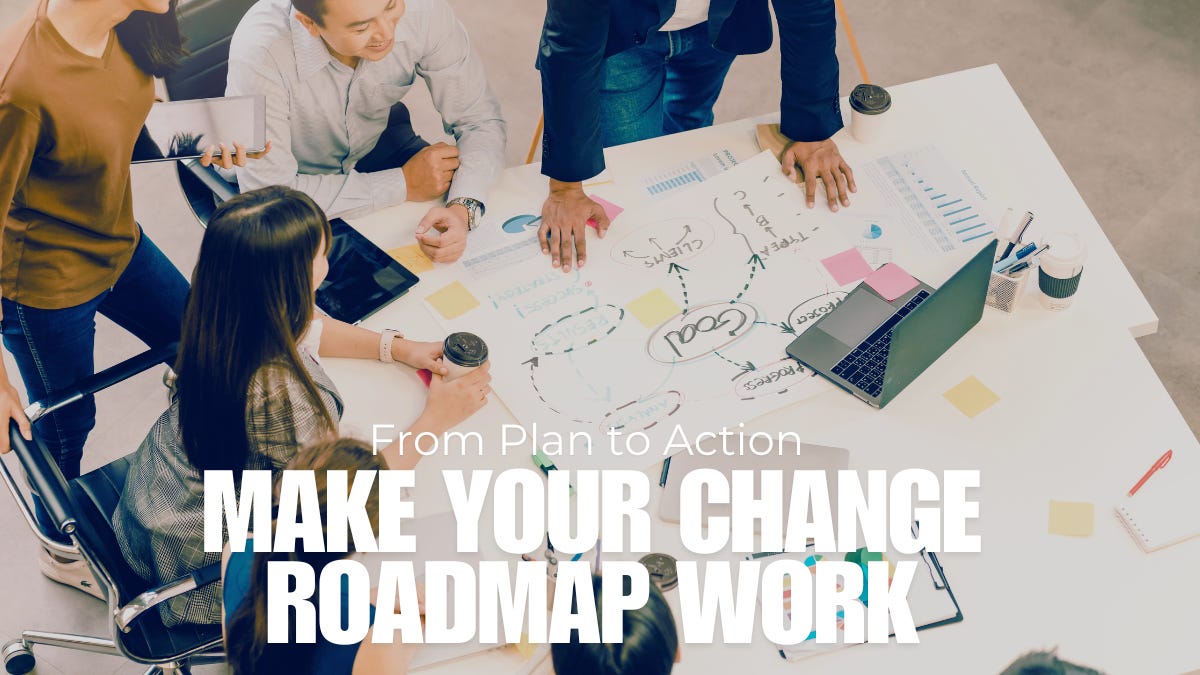
Creating a change roadmap is only the first step; the real challenge lies in bringing it to life and maintaining momentum throughout the process. Implementation can be complex, requiring coordination, adaptability, and consistent communication. This guide will help you move from planning to action and keep your team energised along the way.
Transitioning from Planning to Action
Your roadmap provides the structure, but execution demands focus and discipline. Start by turning high-level milestones into actionable tasks.
Key Steps
Break each milestone into smaller, manageable tasks.
Assign clear ownership for every task.
Ensure every team member understands how their work contributes to the larger goals.
Practical Tip: Use tools like Excel, Google Sheets, or Office 365 Planner to outline detailed tasks and track progress in real time.
Establishing a Rhythm for Progress
Momentum thrives on rhythm. Set up consistent workflows and check-ins to keep everyone aligned and accountable.
Weekly Progress Updates: Share status updates through Teams or email.
Daily Stand-ups: For time-sensitive projects, quick 10-minute meetings can help tackle blockers.
Bi-Weekly Milestone Reviews: Assess broader progress and make course corrections as needed.
Action Tip: Use Teams integrations with Office365 Planner to assign tasks, track completion, and share dashboards for visibility.
Engaging Stakeholders for Buy-In
Stakeholders are your change champions. Regularly involving them in updates and decisions keeps them invested in the progress.
How to Engage Stakeholders:
Host briefings or workshops to showcase progress.
Share visual progress trackers or dashboards.
Actively solicit feedback and adjust plans accordingly.
Action Step: Create a shared Teams Channel or Slack group for open communication and instant updates.
Communicating Progress Effectively
Clear and consistent communication prevents misunderstandings and builds trust. Tailor your updates to different audiences to ensure relevance.
For Teams: Focus on task-level updates and immediate priorities.
For Leaders: Provide high-level insights, major risks, and strategic adjustments.
For External Stakeholders: Highlight milestones and the broader impact of the change.
Action Tip: Use simple visuals like Gantt charts or task completion graphs to make updates digestible.
Sustaining Energy and Morale
Long-term change initiatives can lead to fatigue. Keeping the team motivated requires recognition, celebration and reinforcement of the vision.
Celebrate Small Wins: Acknowledge progress at every stage
Share Stories: Highlight individual or team contributions to the change effort.
Reconnect with the Vision: Remind everyone whey the change matters and the impact it will have.
Example: If a major milestone is reached, host a small celebration, or send a personalised thank-you message to team members.
Navigating Challenges and Adjusting the Plan
Challenges are inevitable. The key is to identify the risks early and adapt your roadmap as needed.
Common Challenges:
Misaligned priorities.
Resource constraints.
Unexpected external changes.
Adaption Strategy:
Conduct ‘lessons learned’ reviews at key checkpoints.
Regularly revisit and revise the roadmap based on feedback and outcomes.
Action Tip: Keep a ‘flexible buffer’ in your timeline to account for delays and unforeseen tasks.
Measuring Success
Evaluate the success of your change initiative using clear metrics. These might include:
Completion rates for milestones.
Stakeholder satisfaction surveys.
Business impact measurements (e.g., increased efficiency, reduced costs).
Action Step: Create a dashboard to track these metrics and share results with stakeholders regularly.
Final Thoughts
Implementing a change roadmap requires persistence, flexibility, and strong communication. By maintaining a rhythm, engaging stakeholders, and celebrating progress, you can keep the momentum alive and ensure your project achieves its goals. Remember, the roadmap is a living document-don’t be afraid to refine it as you go.
What strategies have you used to sustain momentum during change initiatives? Share your insights-I’d love to hear about your experiences!